
Software Testing Life Cycle (STLC): Complete Guide to All Phases
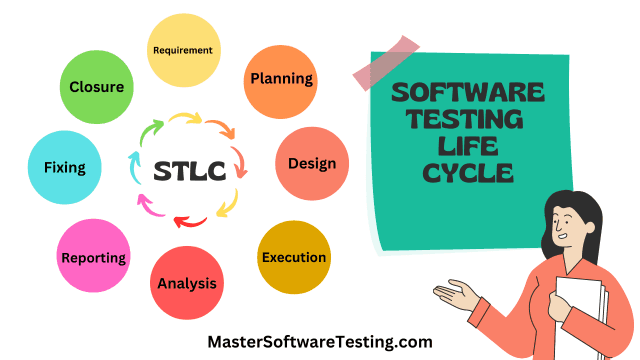 Software Testing Life Cycle (STLC) - All Phases
The Software Testing Life Cycle (STLC) is a systematic sequence of activities that testing teams follow to ensure software meets quality standards before release. Think of STLC as the roadmap that transforms testing from reactive firefighting into a disciplined, predictable process with clear checkpoints and deliverables.
Quick Answer: What is the Software Testing Life Cycle?
| Aspect | Details |
|---|---|
| Definition | A structured sequence of phases for planning, designing, executing, and closing software testing activities |
| Purpose | Ensure systematic testing that catches defects early and verifies software meets requirements |
| Phases | Requirements Analysis, Test Planning, Test Design, Test Execution, Test Analysis, Test Reporting, Fixing, Test Closure |
| Who Uses It | Test managers, QA engineers, automation engineers, business analysts, developers |
| When Applied | Throughout the software development lifecycle, from requirements gathering to release |
| Key Benefit | Predictable quality outcomes with clear traceability from requirements to test results |
Table Of Contents-
- Why STLC Matters
- STLC Phases Overview
- Phase 1: Requirements Analysis
- Phase 2: Test Planning
- Phase 3: Test Design
- Phase 4: Test Execution
- Phase 5: Test Analysis
- Phase 6: Test Reporting
- Phase 7: Fixing
- Phase 8: Test Closure
- STLC vs SDLC
- Entry and Exit Criteria Across Phases
- STLC in Agile vs Waterfall
- Common STLC Challenges
- Best Practices for STLC Implementation
Why STLC Matters
Without a structured testing process, teams chase moving targets. Test cases get written at the last minute. Critical defects slip through to production. Regression testing happens inconsistently. The result is late-night firefighting sessions, emergency patches, and frustrated users.
STLC solves these problems by establishing:
Early defect detection: Testing activities start during requirements analysis, catching issues when they cost the least to fix. A requirement ambiguity found early costs hours to clarify. The same ambiguity discovered during system testing costs days or weeks of rework.
Complete traceability: Every test case traces back to specific requirements. This bidirectional mapping ensures nothing falls through the cracks and enables impact analysis when requirements change.
Predictable quality: Teams following structured STLC know their quality status at every milestone. Stakeholders get reliable data on testing progress, defect trends, and risk areas.
Continuous improvement: The test closure phase captures lessons learned that make future testing cycles more effective.
STLC doesn't replace creative testing or exploratory approaches. It provides the framework within which all testing activities operate, ensuring nothing is missed while still allowing flexibility in execution.
STLC Phases Overview
The Software Testing Life Cycle consists of eight interconnected phases. Each phase has defined entry criteria (what must be ready before starting), activities (what the team does), deliverables (what artifacts get produced), and exit criteria (what must be complete before moving forward).
Requirements Analysis -> Test Planning -> Test Design -> Test Execution
                                                              |
Test Closure <- Fixing <- Test Reporting <- Test Analysis <---+
Here's a visual summary of all phases:
| Phase | Primary Focus | Key Deliverables |
|---|---|---|
| Requirements Analysis | Understanding what to test | RTM, testability assessment |
| Test Planning | Defining testing strategy | Test plan, effort estimates |
| Test Design | Creating test cases | Test cases, test data |
| Test Execution | Running tests | Execution results, defects |
| Test Analysis | Evaluating results | Root cause analysis, patterns |
| Test Reporting | Communicating status | Test reports, metrics |
| Fixing | Resolving defects | Fixed defects, verification |
| Test Closure | Concluding testing | Summary report, lessons learned |
Phase 1: Requirements Analysis
Read the complete Requirements Analysis guide
Requirements analysis is where testing begins. Before writing a single test case, testing teams must understand what the application should do, who will use it, and what quality standards it must meet.
What Happens in This Phase
- Review all requirements documentation (SRS, user stories, acceptance criteria)
- Identify testable and non-testable requirements
- Create the initial Requirements Traceability Matrix (RTM)
- Assess automation feasibility for each requirement
- Document clarification questions for stakeholders
- Identify testing risks early
Key Deliverables
| Deliverable | Purpose |
|---|---|
| Requirements Traceability Matrix | Links requirements to test coverage |
| Automation Feasibility Report | Identifies automation candidates |
| Testability Assessment | Evaluates if requirements can be verified |
| Risk Register | Documents potential testing risks |
💡
Teams that invest time in thorough requirements analysis catch ambiguities when they cost the least to fix. A requirement issue found here costs hours. The same issue found in production costs thousands.
Next step: Test Planning
Phase 2: Test Planning
Read the complete Test Planning guide
Test planning translates requirements understanding into a concrete testing strategy. This phase answers: What will we test? How will we test it? Who will test? When will testing happen?
What Happens in This Phase
- Define testing scope (in-scope and out-of-scope items)
- Select testing types (functional, performance, security, usability)
- Estimate effort and resources needed
- Create the test schedule aligned with project milestones
- Identify testing tools and environments
- Assess and plan for risks
Key Deliverables
| Deliverable | Purpose |
|---|---|
| Test Plan Document | Comprehensive roadmap for all testing activities |
| Test Effort Estimation | Time and resource projections |
| Test Schedule | Timeline showing when activities occur |
| Risk Mitigation Plan | Strategies for identified risks |
The test plan becomes the contract between testing and stakeholders. It sets expectations and provides accountability for what testing will deliver.
Related: How to Create a Test Plan
Next step: Test Design
Phase 3: Test Design
Read the complete Test Design guide
Test design transforms planning into action. This phase creates the specific test cases, test scripts, and test data that testers will execute. Well-designed tests find defects efficiently. Poorly designed tests waste time.
What Happens in This Phase
- Create detailed test cases with steps and expected results
- Design test data sets for various scenarios
- Develop automated test scripts for automation candidates
- Apply test design techniques (boundary value analysis, equivalence partitioning)
- Complete the RTM with test case mappings
- Conduct test case reviews
Key Deliverables
| Deliverable | Purpose |
|---|---|
| Test Case Suite | Complete set of test cases |
| Test Data Sets | Data needed for test execution |
| Automated Test Scripts | Executable automation code |
| Complete RTM | Full requirement-to-test traceability |
Test Design Techniques to Apply
- Boundary Value Analysis: Test at edges of input ranges
- Equivalence Partitioning: Group inputs that should behave the same
- Decision Tables: Handle complex business logic
- State Transition Testing: Validate behavior across states
Next step: Test Execution
Phase 4: Test Execution
Read the complete Test Execution guide
Test execution is where planning meets reality. Testers run test cases, compare actual results to expected results, log defects, and track progress toward completion criteria.
What Happens in This Phase
- Execute manual and automated test cases
- Record pass/fail results with evidence
- Log defects with detailed reproduction steps
- Perform regression testing after fixes
- Track execution progress against schedule
- Communicate daily status to stakeholders
Key Deliverables
| Deliverable | Purpose |
|---|---|
| Execution Results | Pass/fail status for all tests |
| Defect Reports | Documented issues with reproduction steps |
| Execution Logs | Detailed records of testing activities |
| Progress Reports | Status updates for stakeholders |
⚠️
If more than 30% of test cases fail, stop execution and get the build stabilized. Testing a fundamentally broken build wastes time and obscures real quality signals.
Next step: Test Analysis
Phase 5: Test Analysis
Read the complete Test Analysis guide
Test analysis transforms raw test data into actionable insights. Without proper analysis, testing becomes a checkbox activity where tests run but nothing meaningful changes.
What Happens in This Phase
- Review and validate test execution results
- Identify defect patterns and trends
- Perform root cause analysis on significant defects
- Evaluate test coverage against requirements
- Assess testing effectiveness metrics
- Develop recommendations for improvement
Key Deliverables
| Deliverable | Purpose |
|---|---|
| Test Analysis Report | Findings and insights from execution |
| Root Cause Analysis | Why defects occurred |
| Coverage Analysis | Gaps in test coverage |
| Improvement Recommendations | Actions for future cycles |
Test analysis answers three questions: What happened? Why did it happen? What should we do differently?
Next step: Test Reporting
Phase 6: Test Reporting
Read the complete Test Reporting guide
Test reporting communicates quality status to stakeholders. A well-crafted report doesn't just summarize what happened. It informs decisions about release readiness and highlights risks that need attention.
What Happens in This Phase
- Consolidate test results into meaningful summaries
- Calculate and present key metrics
- Communicate release readiness assessment
- Highlight remaining risks and recommendations
- Tailor reports for different audiences
Key Deliverables
| Deliverable | Purpose |
|---|---|
| Test Summary Report | Comprehensive overview of testing |
| Test Metrics Report | Quantitative quality indicators |
| Defect Summary | Status of all identified issues |
| Risk Assessment | Outstanding quality risks |
Different audiences need different reports. Executives need high-level dashboards. Development teams need detailed defect breakdowns. Test reporting delivers the right information to the right people.
Next step: Fixing
Phase 7: Fixing
Read the complete Fixing guide
Defects found during testing mean nothing if they aren't fixed. The fixing phase bridges the gap between identifying problems and delivering working software.
What Happens in This Phase
- Prioritize defects through triage meetings
- Developers analyze root causes and implement fixes
- Testers verify that fixes resolve the issues
- Run regression tests to ensure fixes don't break other functionality
- Update defect status and track resolution progress
Key Deliverables
| Deliverable | Purpose |
|---|---|
| Fixed Defects | Resolved and verified issues |
| Verification Results | Confirmation that fixes work |
| Regression Test Results | Evidence that fixes didn't break other features |
| Updated Defect Reports | Current status of all defects |
The fixing phase often overlaps with ongoing test execution. As testers find new defects, developers fix previous ones. This parallel workflow requires coordination to prevent chaos.
Next step: Test Closure
Phase 8: Test Closure
Read the complete Test Closure guide
Test closure is the final STLC phase where teams consolidate results, analyze testing effectiveness, document lessons learned, and formally conclude testing activities.
What Happens in This Phase
- Create comprehensive test summary report
- Analyze testing metrics and effectiveness
- Document lessons learned for future projects
- Archive all test artifacts
- Conduct closure meeting with stakeholders
- Release testing resources
Key Deliverables
| Deliverable | Purpose |
|---|---|
| Test Summary Report | Final quality assessment |
| Lessons Learned Document | Insights for future projects |
| Archived Artifacts | Complete testing documentation |
| Metrics Analysis | Evaluation of testing effectiveness |
Many teams rush through test closure. That's a mistake. The insights captured here determine whether the next testing cycle repeats the same problems or improves upon them.
STLC vs SDLC
The Software Development Life Cycle (SDLC) encompasses the entire journey of building software. STLC is a subset focused specifically on quality verification.
| Aspect | SDLC | STLC |
|---|---|---|
| Scope | Complete software creation | Testing and quality verification |
| Focus | Building the product | Verifying the product works correctly |
| Phases | Requirements, Design, Development, Testing, Deployment, Maintenance | Requirements Analysis through Test Closure |
| Primary Activities | Analysis, architecture, coding, integration | Test planning, test design, test execution |
| Key Roles | Business analysts, architects, developers | Test managers, QA engineers, automation engineers |
The key insight is that STLC doesn't wait for the SDLC testing phase. STLC activities start during requirements gathering and continue throughout development. This early involvement catches issues when they're cheapest to fix.
For a deeper comparison, see the STLC Overview.
Entry and Exit Criteria Across Phases
Entry and exit criteria establish quality gates that prevent premature progression between phases.
Entry Criteria Summary
| Phase | Key Entry Criteria |
|---|---|
| Requirements Analysis | Requirements documentation available, stakeholders identified |
| Test Planning | Requirements analysis complete, RTM initialized |
| Test Design | Test plan approved, requirements stable |
| Test Execution | Test cases reviewed, environment ready, build deployed |
| Test Analysis | Test execution complete, results documented |
| Test Reporting | Analysis complete, metrics calculated |
| Fixing | Defects logged with reproduction steps |
| Test Closure | Exit criteria met, defects resolved or deferred |
Exit Criteria Summary
| Phase | Key Exit Criteria |
|---|---|
| Requirements Analysis | All requirements reviewed, RTM established |
| Test Planning | Test plan approved, resources assigned |
| Test Design | Test cases reviewed, RTM complete |
| Test Execution | Tests executed, pass rate achieved |
| Test Analysis | Root causes identified, recommendations documented |
| Test Reporting | Reports delivered, stakeholders informed |
| Fixing | Critical defects resolved, fixes verified |
| Test Closure | Summary approved, artifacts archived |
STLC in Agile vs Waterfall
STLC principles apply across methodologies, but implementation differs.
Waterfall Approach
- Sequential phase execution
- Comprehensive upfront planning
- Extensive documentation
- Longer testing cycles
- Formal phase gates with sign-offs
Agile Approach
- Iterative cycles within sprints
- Just-in-time test planning
- Lightweight documentation
- Continuous testing throughout development
- Parallel development and testing
What Stays the Same
Regardless of methodology, teams still need to:
- Understand requirements before testing
- Plan their testing approach
- Design effective test cases
- Execute tests systematically
- Analyze results and improve
The core STLC principles remain constant. The timeline and documentation formality change.
Common STLC Challenges
Late Testing Involvement
Problem: Testing teams engage after development completes.
Solution: Involve testers during requirements analysis. Early involvement catches issues before they become expensive.
Inadequate Test Environments
Problem: Test environments don't mirror production.
Solution: Use infrastructure-as-code, containerization, and environment refresh cycles to maintain consistency.
Poor Requirements Quality
Problem: Ambiguous or constantly changing requirements.
Solution: Implement requirements review checklists, use acceptance criteria templates, and establish change control processes.
Insufficient Automation
Problem: Over-reliance on manual testing creates bottlenecks.
Solution: Develop automation strategy early, allocate dedicated automation time, and focus automation on stable, repetitive scenarios.
Communication Gaps
Problem: Defects poorly described, priorities misaligned.
Solution: Daily standups, defect triage meetings, and shared dashboards improve visibility.
Best Practices for STLC Implementation
Shift Testing Left
Start testing activities during requirements analysis, not after development completes. Early involvement catches issues when they're cheapest to fix.
Establish Clear Entry and Exit Criteria
Define specific, measurable criteria for entering and exiting each phase. Don't allow premature progression because calendar dates arrive.
Maintain Traceability
Implement and maintain RTM linking every requirement to its test cases. This ensures complete coverage and enables impact analysis.
Apply Risk-Based Testing
Not all functionality deserves equal testing investment. Focus deeper testing on high-risk, high-impact areas.
Balance Manual and Automated Testing
Automation is essential for regression testing. Manual testing remains valuable for exploratory testing and usability evaluation.
Foster Collaboration
Quality is a team responsibility. Implement three-amigos sessions, cross-functional defect triage, and shared quality metrics.
Invest in Test Data Management
Create test data strategy including synthetic data generation, production data masking, and curated data sets.
Conduct Meaningful Retrospectives
Use test closure to capture lessons learned. Assign owners to improvement actions and follow up on implementation.
Explore All STLC Phases
Navigate to each phase for comprehensive guidance:
| Phase | Learn About |
|---|---|
| STLC Overview | Foundational concepts and principles |
| Requirements Analysis | Understanding what to test |
| Test Planning | Defining testing strategy |
| Test Design | Creating effective test cases |
| Test Execution | Running tests and logging defects |
| Test Analysis | Evaluating results and patterns |
| Test Reporting | Communicating quality status |
| Fixing | Resolving identified defects |
| Test Closure | Concluding testing activities |
Related Topics
Deepen your STLC knowledge with these related resources:
- Software Testing Principles: Core principles that guide effective testing
- Test Case Design Techniques: Methods for creating effective tests
- Defect Life Cycle: How defects move through resolution
- Risk-Based Testing: Prioritizing testing effort by risk
- V-Model in Software Testing: Testing integrated with development phases
Quiz on Software Testing Life Cycle (STLC)
Your Score: 0/9
Question: What is the primary purpose of the Software Testing Life Cycle (STLC)?
Continue Reading
Frequently Asked Questions (FAQs) / People Also Ask (PAA)
What is the Software Testing Life Cycle (STLC)?
What are the main phases of STLC and what happens in each?
What is the difference between STLC and SDLC?
What are entry and exit criteria in STLC and why are they important?
How does STLC differ between Agile and Waterfall methodologies?
What is the Requirements Traceability Matrix (RTM) and how is it used in STLC?
What are the common challenges teams face when implementing STLC?
How do you measure the effectiveness of STLC implementation?